
Managing a night crew introduces a completely different set of hazards compared to daytime construction. When the sun dips below the horizon, shadows become safety liabilities, and every unlit trench transforms into a potential disaster.
Securing the right illumination gear is not just about keeping the site bright for your workers. It is about maintaining your rigorous project timeline without burning a massive hole through your diesel budget.
This is exactly why tracking down a trustworthy mobile light tower supplier ranks as a top priority for procurement officers this year. We are looking at an industrial market in 2026 that has fundamentally transformed its approach to site power.
The loud, fuel-thirsty machines your crews relied upon a decade ago are being rapidly phased out by smarter technology. Today, project directors must weigh the gritty reliability of combustion engines against the massive cost savings of renewable energy.
At Shaktiman, we know that matching the correct lighting technology to your specific geography is the secret to a highly profitable night shift. This exhaustive buyer’s manual will walk you through the distinct advantages of every power configuration on the market today.
The Shifting Tides of Night time Operations
The heavy equipment sector is experiencing a massive pivot toward sustainable practices right now. Global emission standards are tightening rapidly, forcing forward-thinking site managers to rethink exactly how they burn fossil fuels.
At the same time, the raw performance of specialized light-emitting diodes has skyrocketed beyond our initial expectations. Modern optical fixtures generate an intensely bright, uniform beam while sipping a mere fraction of the electricity required by legacy halogen systems.
Because these modern bulbs need so little power to operate, alternative energy sources are finally robust enough for rough industrial applications. As a dedicated mobile light tower supplier, we have watched contracting firms rapidly adopt these eco-friendly configurations to satisfy stringent corporate green mandates.
Why Your Vendor Relationship Dictates Project Momentum
Buying heavy-duty site equipment is never a simple, isolated point-of-sale exchange. You are essentially hiring a hardware partner to keep your nighttime operations running smoothly for the next several years.
If a machine breaks down at two in the morning, a lack of immediate manufacturer support will cost you severe project delays. Working with a dedicated provider ensures you have direct access to critical replacement parts and immediate, expert troubleshooting advice.
The engineering team at Shaktiman takes this operational responsibility incredibly seriously. We actively investigate your specific wind patterns, expected daylight hours, and terrain challenges before we ever suggest a piece of machinery.
The Old Guard: Combustion-Powered Illumination
Internal combustion lighting rigs have dominated construction zones since the very concept of the night shift began. These machines are unapologetically loud, heavily built, and entirely familiar to your average site mechanic.
The Distinct Upside
The most compelling reason to buy a combustion-based unit is its sheer, unyielding stubbornness. These traditional towers do not care if it rains for a month straight or if heavy winter snow blocks out the sky completely.
As long as your logistics team remembers to keep the liquid fuel tank topped off, the lights will stay on indefinitely. Furthermore, the initial invoice for these traditional setups is generally much lighter than the price tag attached to modern renewable variants.
The Harsh Reality
However, the long-term financial reality of running combustion engines is incredibly harsh on your bottom line. You are locking your company into a never-ending cycle of purchasing liquid fuel, organizing transport deliveries, and paying mechanics for endless filter changes.
Additionally, the heavy carbon output and constant engine rattling can easily violate strict noise ordinances if you are digging near populated residential neighborhoods.
Chasing the Sun: Purely Renewable Setups
Harnessing the sun to illuminate a heavy-duty dirt site felt like science fiction just a few short years ago. Today, robust photovoltaic arrays paired with deep-cycle energy storage are completely revolutionizing the way contractors light up the dark.
The Distinct Upside
The financial beauty of an off-grid, sun-powered rig becomes brilliantly obvious the moment you deploy it. Once the heavy equipment hits your dirt, your daily energy expenses drop to absolutely zero.
There are no spark plugs to replace, no oil pans to drain, and absolutely zero toxic exhaust fumes to choke your ground workers. They operate in total silence, making them the ultimate tool for urban development zones where noise complaints can instantly halt your progress.
The Harsh Reality
The undeniable bottleneck of running exclusively on sun-powered hardware is that you surrender total control of your energy intake to unpredictable weather patterns. If your job site sits in a region prone to weeks of heavy overcast skies, the battery reserves will eventually drain completely. To counter poor weather, you must purchase massive, highly expensive energy storage upgrades. You must also be mentally prepared to write a noticeably larger initial check when securing these environmentally friendly machines from your dealer.
The Middle Ground: Dual-Power Lighting Units
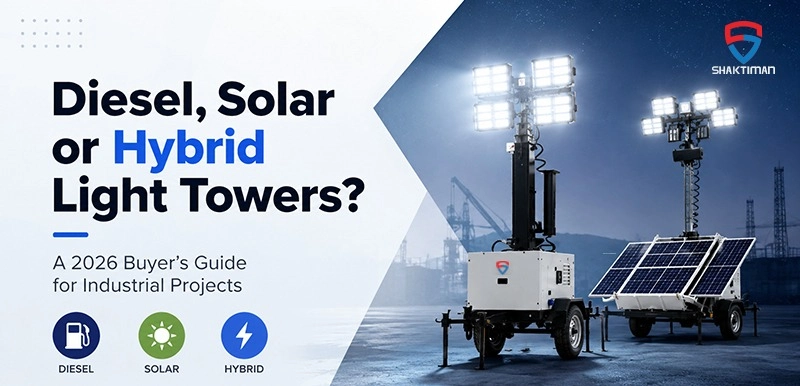
For procurement directors who refuse to compromise on either reliability or running costs, dual-power lighting units offer an incredibly compelling solution. These advanced machines pack a full array of solar panels alongside a tiny, highly efficient mechanical engine.
The Distinct Upside
The onboard digital computer handles the delicate power balancing act automatically, prioritizing stored battery power above all else. If a brutal storm rolls in and starves the solar panels, the mechanical engine quietly fires up to replenish the depleted cells.
This genius automated switching mechanism can erase up to eighty percent of your usual fuel consumption. You secure the unyielding dependability of a classic engine mixed seamlessly with the aggressive cost-cutting nature of renewable tech.
The Harsh Reality
Naturally, packing two vastly different power generation systems into a single towable trailer introduces a new layer of mechanical complexity. You will pay a distinct premium over standard fuel models for the privilege of owning one.
Furthermore, your on-site service technicians will need to understand both electrical storage diagnostics and basic combustion engine upkeep to keep the fleet healthy.
Calculating the True Financial Drain
Looking exclusively at the sticker price on the dealer’s lot is the easiest way to accidentally blow your project budget over the long term. To grasp the real financial weight of your purchase, you have to accurately map out the Total Cost of Ownership over a half-decade.
Standard fuel-burning machines look incredibly attractive on day one strictly because they require the smallest initial capital investment. Yet, the relentless daily costs of diesel top-offs and mechanical labor quickly devour those upfront savings.
Usually, within twenty-four months, the cash you burned feeding a combustion engine will eclipse the premium price of a renewable alternative. By investing in dual-power or sun-driven setups, you fiercely protect your company from volatile global oil prices.
Strict Procurement Checklist for 2026
Before signing off on any major purchase order, you must scrutinize a few non-negotiable technical details with your sales representative.
Evaluating the Beam Quality
Never base your final decision solely on the stated raw wattage of the LED lamps. You must physically inspect how the optical lenses shape and throw the light beam across the dirt.
Premium arrays spread a crisp, highly uniform blanket of illumination that actively prevents harsh shadows. They do this without blinding your heavy machinery operators as they navigate the site.
Demanding Structural Integrity
A fully extended mast acts exactly like a giant canvas sail when a severe thunderstorm hits your remote location. Ensure your chosen rig features a thick, galvanized steel skeleton to prevent bending.
You also need to inspect the wide-stance stabilizing outriggers to prevent catastrophic, highly dangerous tip-overs during high-wind events.
Insisting on Digital Tracking
We are operating in an era of fully connected job sites, and your expensive equipment should reflect that digital reality. Demand machinery that is factory-equipped with cellular tracking and internal diagnostic sensors.
This remote technology lets your fleet manager check battery health and fuel levels directly from a warm office laptop. This eliminates countless hours of manual, freezing-cold site inspections.
People Also Ask (FAQs)
Here are some of the most common questions buyers ask when choosing modern light towers for construction sites, infrastructure projects, and remote work areas.
Conclusion
Deciding exactly how to power your midnight operations will heavily influence your corporate bottom line for years into the future. The heavy industry sector is aggressively walking away from loud, dirty equipment in favor of much smarter, autonomous machinery.
While classic combustion rigs will always serve a vital purpose in rapid emergency scenarios, the sheer financial logic of alternative energy is impossible to ignore today. The slightly higher cost of entry pays for itself over and over again through eliminated fuel runs and drastically slashed mechanic bills.
Do not let poor visibility slow down your excavation progress or endanger your hardworking workforce. Align yourself with a highly capable mobile light tower supplier who truly grasps the nuances of modern contracting equipment.
Reach out to the technical specialists at Shaktiman today, and let us engineer a brighter, highly profitable fleet for your next massive project.
Recent Comments