

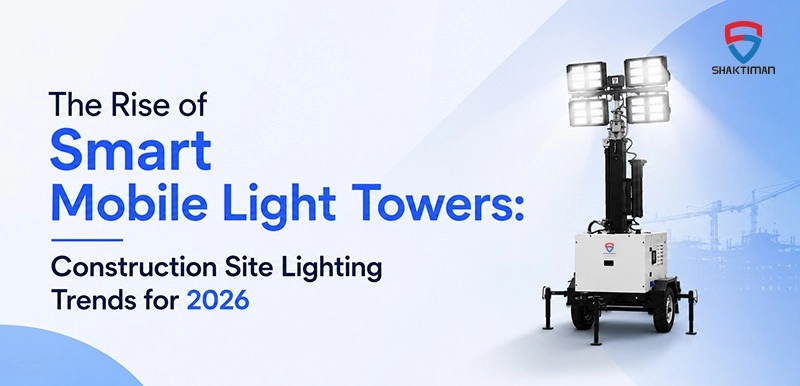
Introduction: The Evolution of Site Illumination in 2026
The global push for massive infrastructure development has completely changed how construction sites operate. Working exclusively during daylight hours is no longer a viable option for mega-projects.
Highway expansions, metro rail developments, and commercial tech parks now run strictly on 24/7 schedules. To maintain worker safety and project momentum after dark, reliable site illumination is an absolute necessity.
However, the equipment used to light these sites has undergone a massive technological shift. The loud, fuel-guzzling metal-halide towers of the past have officially become obsolete.
In 2026, site managers demand intelligent, highly efficient, and eco-friendly lighting solutions. Choosing a forward-thinking Mobile Light Tower Manufacturer is now a critical strategic decision for controlling operational costs.
Why Your Choice of Mobile Light Tower Manufacturer Matters Today
A few years ago, purchasing temporary site lighting was a simple, transactional process. You bought a diesel generator with a mast, filled it with fuel, and turned it on.
Today, the stakes are significantly higher. Fuel costs are volatile, environmental regulations are stricter, and project profit margins are exceptionally tight.
Partnering with an expert Mobile Light Tower Manufacturer guarantees that you are investing in modern engineering, not outdated legacy tech. An elite manufacturer understands the precise lighting requirements of complex industrial environments.
A reputable manufacturer provides equipment that delivers high lumen output while drastically minimizing energy consumption. They also offer the localized service networks required to keep your job site running without costly downtime.
If your supplier is simply importing generic towers without customizing them for harsh local weather and rugged terrain, your project will suffer.
5 Major Construction Site Lighting Trends for 2026
1. The Dominance of Solar and Hybrid Power
The era of relying entirely on standard diesel engines for illumination is rapidly ending. The most significant shift in 2026 is the widespread adoption of green energy alternatives.
Solar mobile light towers are taking over urban construction sites and remote mining operations alike. By utilizing high-capacity lithium battery banks and advanced MPPT solar controllers, these towers provide zero-emission, zero-fuel lighting.
When heavy cloud cover persists, hybrid models step in. A hybrid light tower seamlessly switches between battery power and a highly efficient backup diesel generator.
This hybrid approach allows contractors to reduce their diesel consumption by up to 60%. Over a multi-year project, these fuel savings directly increase the contractor’s bottom line.
2. High-Efficiency Micro-Lens LED Technology
Metal-halide bulbs are notoriously fragile, consume massive amounts of power, and require constant replacement. In 2026, high-efficiency LED fixtures are the undisputed industry standard.
Modern LED arrays are now equipped with advanced micro-lens optics. This technology directs the light beam precisely where it is needed, drastically reducing light spillage and eliminating blinding glare.
This glare reduction is incredibly important for highway construction. It ensures that passing motorists are not blinded while providing crystal-clear visibility for the work crew.
Furthermore, modern LED fixtures offer lifespans exceeding 50,000 hours. A premium Mobile Light Tower Manufacturer will integrate LEDs that can easily withstand the heavy vibrations of off-road transportation.
3. Smart IoT and Remote Fleet Monitoring
Managing a fleet of dozens of lighting towers spread across a massive infrastructure project is a logistical nightmare. That is why telematics and IoT (Internet of Things) integration have become mandatory features.
Smart light towers now connect directly to cloud-based management dashboards via cellular networks. Equipment managers can log into a portal to see the exact GPS location of every unit.
More importantly, telematics provide real-time data on fuel levels, battery health, and engine performance. If a tower experiences a sudden drop in fuel—indicating potential fuel theft—the system sends an instant alert to the manager’s smartphone.
This technology allows for proactive maintenance. Instead of waiting for a tower to fail during a night shift, mechanics are alerted to change the oil or replace a filter before a breakdown occurs.
4. Hydraulic Automated Lifting Systems
In the past, raising a 9-meter mast required a worker to manually crank a heavy mechanical winch. This process was slow, physically exhausting, and posed serious safety risks if the cable snapped.
The 2026 standard dictates a massive shift toward fully hydraulic lifting systems. With the simple push of a button on the control panel, the mast smoothly elevates to its maximum height within seconds.
This automation vastly improves job site safety by removing the manual labor component. It also accelerates site setup times, allowing crews to position their lighting and begin work immediately.
Top-tier manufacturers are also integrating auto-leveling sensors. If the chassis is parked on uneven terrain or experiences high wind speeds, the system will prevent the mast from extending to unsafe heights.
5. Strict Emission and Noise Compliance
Governments worldwide are cracking down on construction site pollution, and India is no exception. Strict CPCB IV emission norms have forced contractors to upgrade their aging equipment fleets.
A certified Mobile Light Tower Manufacturer engineers their products to meet or exceed these aggressive emission standards. This is critical for contractors bidding on government infrastructure or smart city projects.
Noise pollution is equally heavily regulated, especially for nighttime construction within dense residential zones.
The latest mobile towers feature highly insulated metal canopies and silent battery modes. They operate well below the 75-decibel threshold, ensuring compliance with urban noise ordinances while keeping the community undisturbed.
The Economics of Smart Light Towers
Upgrading to smart, hybrid, or solar light towers requires a slightly higher initial capital investment. However, the Total Cost of Ownership (TCO) paints a highly profitable picture.
Traditional diesel towers incur continuous daily expenses. You are constantly paying for diesel fuel, frequent oil changes, engine filter replacements, and the labor required to transport the fuel to remote sites.
By partnering with a trusted Mobile Light Tower Manufacturer for solar or hybrid models, those daily operating expenses drop to near zero.
The return on investment (ROI) on a smart solar tower is typically realized within the first 14 to 18 months of operation. Once the tower pays for itself in fuel savings, it generates free, reliable light for years to come.
How Shaktiman is Pioneering Light Tower Technology
As one of India’s most trusted energy and engineering solutions companies, Shaktiman is leading the portable lighting revolution. We do not just assemble equipment; we engineer site-specific solutions.
As a premier Mobile Light Tower Manufacturer, Shaktiman delivers heavy-duty diesel, advanced hybrid, and 100% solar-powered light towers. Our products are specifically ruggedized for India’s extreme weather and demanding industrial environments.
Our solar models feature high-capacity 48V lithium battery banks and advanced 600W solar panels. They provide up to 18 hours of continuous, brilliant illumination on a single charge.
With heavy-duty towable chassis, CPCB IV-approved engines, and integrated soundproofing canopies, Shaktiman towers are built for performance. We proudly support the nation’s biggest highway, metro rail, and commercial infrastructure projects.
People Also Ask (FAQs)
Here are some of the most common questions buyers ask when choosing modern light towers for construction sites, infrastructure projects, and remote work areas.
Conclusion: Future-Proofing Your Job Site
The equipment you choose today dictates the profitability and safety of your job site tomorrow. Operating with outdated, fuel-heavy lighting systems actively drains your project budget.
The lighting trends for 2026 are crystal clear: the future belongs to solar integration, high-efficiency LEDs, and intelligent fleet tracking.
Embracing these advancements improves worker visibility, lowers your carbon footprint, and protects your profit margins from volatile fuel prices.
Selecting the right equipment partner is the most important step. Aligning with an expert Mobile Light Tower Manufacturer ensures you have the robust, technologically advanced equipment necessary to conquer any nighttime operation. Ensure your job site stays bright, compliant, and cost-effective well into the future.
Recent Comments