


Introduction
Walk onto any active construction site, mining pit, or oil and gas facility after sunset, and you’ll notice one thing immediately — nothing moves without light.
Not equipment. Not crews. Not safety checks.
That’s where a mobile light tower earns its place as one of the most under-appreciated pieces of equipment on a job site. It isn’t glamorous. But it’s the difference between a site that runs 24/7 and one that shuts down at dusk.
This article breaks down how modern light towers work, why they matter for safety and output, and what actually separates a good mobile light tower manufacturer from one that’s just selling metal poles with bulbs on top.
Why Job Sites Can't Run Without Proper Lighting
Construction, mining, and infrastructure projects rarely run on daylight-only schedules anymore. Deadlines are tighter, labor shifts are longer, and many projects — especially in the Middle East — deliberately shift heavy work to night hours to avoid extreme daytime heat.
That single shift in working pattern has made portable lighting a non-negotiable line item in most equipment fleets, not an optional add-on.
Poor lighting on a job site doesn’t just slow things down. It directly increases the risk of falls, equipment collisions, and missed hazard signage — the kind of incidents that show up in safety audits and insurance claims.
What Is a Mobile Light Tower?
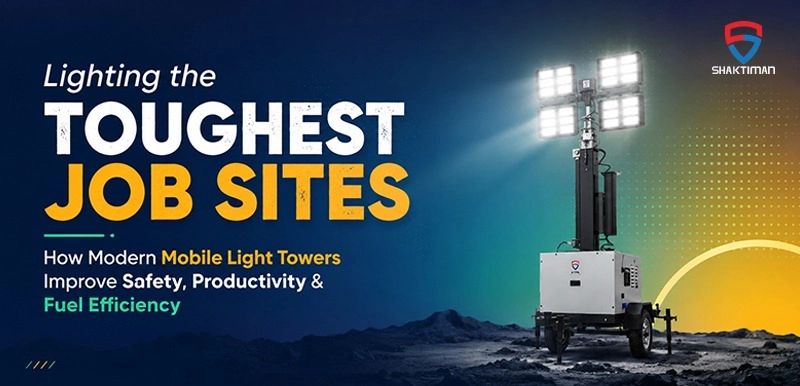
A mobile light tower is a self-contained, towable or skid-mounted unit that combines a power source, a telescoping mast, and high-output lighting fixtures to illuminate large outdoor work areas.
Unlike fixed lighting, it’s built to move — from one active zone of a site to another, or from project to project entirely.
Core Components
- Mast – Typically telescopic, extending anywhere from 20 to 30+ feet, so light spreads over a wide radius instead of a narrow beam.
- Light fixtures – Metal halide (older technology) or LED (current standard) heads, usually four per tower.
- Power source – An onboard diesel generator, a battery bank, or a hybrid combination of both.
- Chassis – A trailer-mounted or skid base, built for towing behind a pickup or positioning with a forklift.
- Control panel – Manages mast height, light angle, run-time, and (on newer units) remote monitoring.
Diesel vs LED vs Hybrid Light Towers
This is where most buying confusion happens, so here’s the short version:
Diesel-powered towers are the traditional workhorse — reliable, high output, widely serviceable, but fuel-hungry if the generator and light heads aren’t efficiently matched.
LED light towers don’t refer to the power source but the light head itself. LED fixtures use a fraction of the wattage that old metal halide heads needed for the same brightness, which is the single biggest fuel-saving upgrade the industry has made in the last decade.
Hybrid towers pair a smaller generator with a battery bank, letting the unit run silently on battery for stretches and only fire the engine to recharge — useful for sites near residential areas or where noise restrictions apply.
How Mobile Light Towers Improve Job Site Safety
Safety is the primary reason regulators and site managers treat lighting as mandatory equipment, not an accessory.
Reduced fall and trip hazards. As daylight fades, everyday site hazards such as uneven surfaces, excavation areas, and stored construction materials become much harder to identify, increasing the likelihood of slips, trips, and workplace accidents. A properly placed light tower removes shadow zones where these hazards hide.
Better equipment operator visibility. Operators running excavators, cranes, or loaders at night depend entirely on artificial light to judge distances accurately.
Improved visibility of PPE and signage. High-vis vests, barrier tape, and warning signs only work if they can actually be seen — bright, even lighting makes them functional rather than decorative.
Lower risk of vehicle and equipment collisions. Site vehicles moving between zones need consistent light coverage, not isolated bright spots with dark gaps between them.
Faster emergency response. In the event of an incident, well-lit sites let response teams act immediately instead of losing critical minutes locating the problem area.
The Productivity Connection: Light Equals Output
There’s a direct, measurable link between lighting quality and how much work actually gets done per shift.
Crews working under poor or inconsistent light naturally slow down — not because they’re less capable, but because visual strain and hazard-checking eat into task time.
Good lighting also extends the effective working day. Projects that would otherwise stop at sunset can push into extended shifts, which matters enormously on time-bound contracts with penalty clauses.
It also affects quality control. Inspectors, surveyors, and QA teams reviewing concrete pours, welds, or structural work at night need light that’s bright and even — not just “enough to see by.”
Fuel Efficiency: The Real Cost of Running a Light Tower
Fuel is usually the single largest recurring cost of operating a light tower fleet, which is why manufacturers now design specifically around efficiency rather than raw output alone.
Three factors drive fuel consumption more than anything else:
- Light head technology – LED heads cut power draw dramatically compared to older metal halide setups, often reducing generator load enough to allow a smaller, more fuel-efficient engine.
- Generator sizing – An oversized generator running a light load burns fuel inefficiently; matching generator capacity to actual lighting demand is where real savings happen.
- Auto-dimming and scheduling features – Newer towers can automatically dim or shut off during low-activity hours, cutting run-time fuel use without manual intervention.
A well-engineered mobile light tower isn’t just brighter — it’s designed so every liter of diesel converts into more usable light output, not wasted heat and inefficiency.
Industries That Depend on Mobile Light Towers
- Construction – Site prep, structural work, and finishing tasks that run past daylight hours.
- Mining and quarrying – Continuous operations that rarely pause for daylight cycles.
- Oil & gas – Remote sites where fixed infrastructure lighting isn’t practical.
- Roadwork and infrastructure projects – Especially night-shift resurfacing and utility work.
- Events and emergency response – Temporary lighting for large gatherings or disaster recovery zones.
- Ports and logistics yards – Round-the-clock loading and vehicle movement.
Across the UAE, Saudi Arabia, and the wider GCC region specifically, night-shift construction has become standard practice during summer months, which has pushed demand for reliable, fuel-efficient light towers even higher.
What to Look for in a Mobile Light Tower Manufacturer
Not every manufacturer builds to the same standard, and the difference shows up in year two or three of ownership, not on day one. Here’s what actually matters:
Build quality of the mast and chassis. A mast that doesn’t hold rigid under wind load is a safety issue, not a minor inconvenience.
Engine and generator brand. Reputable manufacturers pair their towers with proven engine brands like Cummins rather than unbranded components, which directly affects long-term reliability and parts availability.
LED light output and coverage radius. Ask for actual lux ratings and coverage area, not just wattage figures.
After-sales support and spare parts network. In regions like the UAE and Saudi Arabia, a manufacturer with local service and parts availability is worth more than marginal price differences.
Customization for site-specific needs. Some projects need extended mast height, others need explosion-proof configurations for oil & gas — a manufacturer that only sells one fixed spec is a red flag.
Compliance and certification. Confirm the tower meets relevant regional safety and emissions standards before purchase, not after.
Maintenance Tips to Extend Light Tower Life
- Check mast cables and locking pins before every relocation — this is the most common failure point on towable units.
- Clean light lenses regularly; dust buildup in desert environments can cut effective brightness noticeably.
- Follow generator service intervals strictly, especially oil and filter changes in high-dust conditions.
- Inspect tires and axle components on towable units before every long-distance move.
- Keep a basic spares kit on-site — fuses, bulbs (if non-LED), and cable connectors — to avoid downtime waiting on parts.
People Also Ask (FAQs)
Below are answers to some of the most frequently asked questions about mobile light towers, including fuel efficiency, coverage area, operating conditions, towing requirements, and choosing the right lighting solution for industrial projects.
Final Word
A mobile light tower isn’t just equipment that gets switched on at dusk — it’s what keeps a site safe, on schedule, and running efficiently once the sun goes down.
The manufacturer behind it matters just as much as the specs on paper. Build quality, engine reliability, LED efficiency, and genuine after-sales support are what separate a tower that lasts a decade from one that becomes a recurring maintenance headache within a year.
For teams evaluating options, the smartest move is asking for real performance numbers — lux output, fuel burn per shift, and service network coverage — rather than relying on brochure claims alone.
Recent Comments